
Token Maxxing, Workslop, and the Metric That Actually Matters
Silicon Valley's AI token leaderboards produced expensive noise instead of value. Here's what the token-maxxing backlash reveals about building a team that actually delivers — and why the bottleneck is now people, not AI.
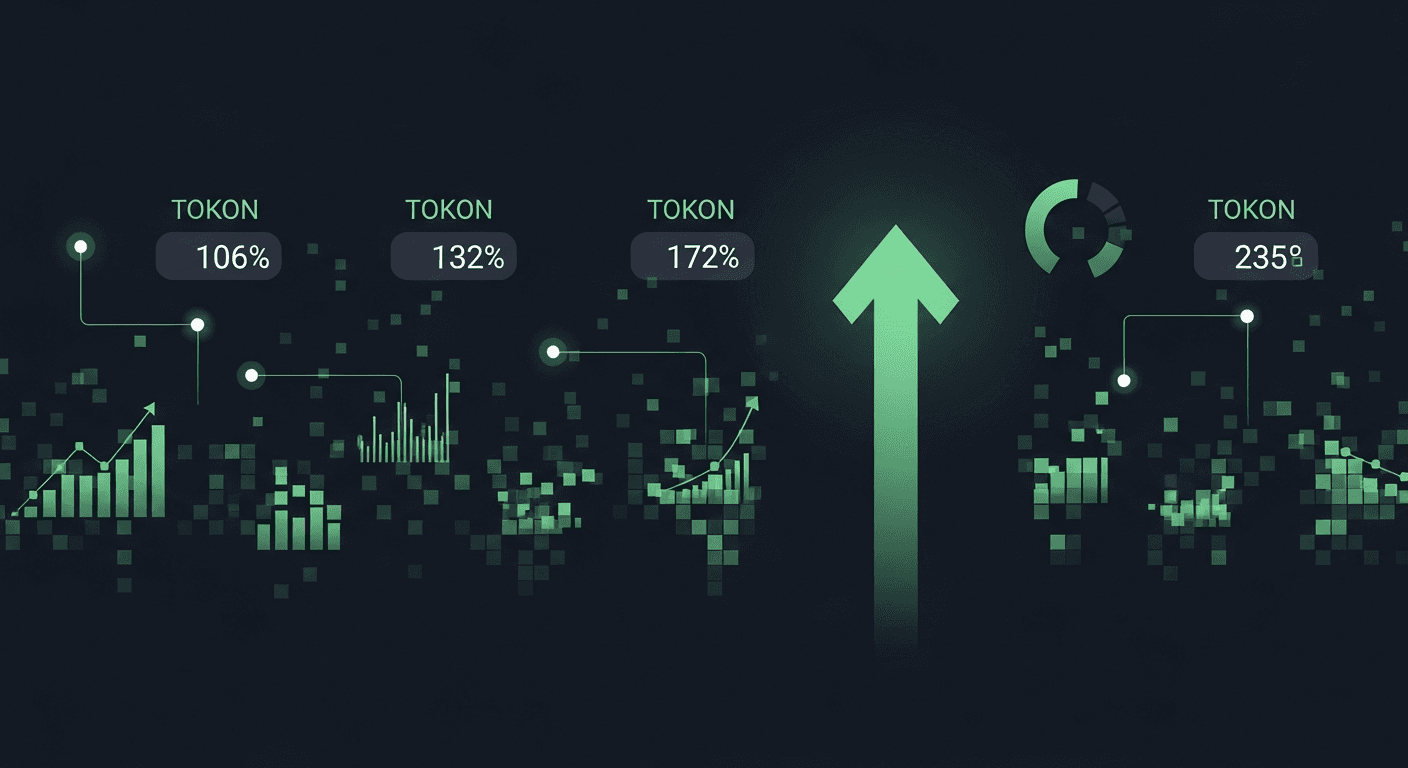
There is a new status symbol in Silicon Valley, and it is not a title or a corner office. It is a number on a leaderboard measuring how many AI tokens you burned this month.
Earlier this year, an internal dashboard at Meta — nicknamed “Claudeonomics” — started ranking employees by how much AI they consumed, handing out titles like “Token Legend” to the biggest spenders. The trend picked up a name almost immediately: token maxxing. Microsoft, Salesforce and Amazon all had their own versions. At some companies the quiet message to staff was blunt: use enough tokens, or get flagged for using too few.
It is a fascinating moment in the story of work. And if you run a business in Australia, it holds a lesson that has nothing to do with whether you have ever touched a coding agent.
What Token Maxxing Actually Is
The logic goes like this: AI is the most powerful productivity tool most of us have ever had. So the people using the most of it must be the most productive — and the people using the least must be falling behind. Track the tokens, and you have a tidy proxy for who is “AI native” and who is not.
Even Nvidia’s Jensen Huang leaned into it, remarking that he would be alarmed if a high-salaried engineer was not consuming significant volumes of AI. Consumption became a signal of value.
Then the bills arrived.
Uber reportedly burned through its entire 2026 AI budget in three months. Companies discovered that agentic AI can consume up to a thousand times more tokens than a simple chatbot query — and that when you reward people for burning tokens, they will burn tokens. Engineers started spinning up agents to build things they would never ship, just to climb the rankings. The result was a wave of what people are now calling workslop: high-volume, low-value, error-riddled output that someone else then had to clean up.
Meta’s leaderboard was quietly taken down. The industry started coining a new term — valuemaxxing — to describe what it should have been measuring all along: not how much AI you use, but what you actually get out of it.
The Trap Underneath the Trend
Strip away the AI and token maxxing is just the oldest management mistake there is: confusing activity with outcomes.
It is the same error as ranking developers by lines of code, salespeople by calls dialled, or writers by word count. The moment you turn an input into a target, people optimise the input — and the thing you actually cared about quietly walks out the back door. Token counts do not tell you whether the work was any good, whether a human had to redo it, or whether you overpaid for a result you could have got another way.
Any founder who has scaled a team knows this intuitively. Headcount is not output. Hours logged are not progress. A busy team is not the same as an effective one. The number that is easy to measure is almost never the number that matters.
The same trap runs through the outsourcing industry, by the way. Volume-driven offshore staffing operates on its own version of token maxxing — maximise seats, maximise billable hours, maximise headcount, and present those numbers as if they were value. It is the same vanity metric wearing a different costume. You end up paying for activity, not outcomes, and the human cost gets buried in a spreadsheet. It is one reason we built Team Up Now differently.
Where This Lands for the Workforce
Here is the part that should actually shape how you build your team over the next few years.
The token-maxxing backlash did not conclude that AI is overhyped. It concluded that AI without judgement is expensive noise. The organisations winning right now are not the ones consuming the most AI — they are the ones with skilled people who know how to point it at the right problem, review what comes back, catch the workslop, and turn raw output into something a customer will actually pay for.
The future of work is not AI instead of people. It is AI in the hands of capable people. The bottleneck has quietly shifted from “can we generate the work?” to “who has the judgement to make the work good, and the capacity to actually do it?”
That is a workforce question. And for most Australian SMEs, it is the expensive one.
What a Capable Person with the Right Tools Actually Looks Like
When you hire a skilled Filipino professional and pair them with modern AI tools, you do not get more noise. You get:
- An accountant who uses AI to close the books faster and catches the error the model missed
- A marketing coordinator who ships more content, and ships it better
- A customer support specialist who resolves tickets at twice the pace while keeping the quality a chatbot never could
- An operations hire who automates the busywork so they can spend their time on the judgement calls no dashboard can make
That combination — leverage plus judgement — is what creates real productivity. Neither half works without the other.
This is exactly why ethical, skills-matched offshore staffing matters more now, not less. The value is not in the seat. It is in the person sitting in it, and what they can do with the tools you give them.
The Metric That Was Always Real
Token maxxing was never really about AI. It was about organisations reaching for a shortcut to measuring knowledge work — and discovering, at considerable expense, that there is no shortcut.
The metric that actually matters has not changed: value created. Everything else — tokens consumed, hours logged, seats filled, words generated — is a proxy that eventually gets gamed.
The businesses that come out ahead from here will not be the ones burning the most tokens, or filling the most seats. They will be the ones who paired the leverage of AI with skilled, motivated, ethically-employed people — and held themselves accountable to the only number that was ever real.
If you are thinking about where skilled offshore talent fits into your business as AI reshapes the work, that is the conversation we love having.
Team Up Now helps Australian businesses build dedicated remote teams in the Philippines — placed carefully, paid fairly, fully compliant, and backed by a lifetime replacement guarantee. Learn how it works.
Ready to scale your operations?
Talk to us about building a dedicated offshore team that fits your business. No obligation, no pressure.
Related articles
BFCM 2026: Is Your Ecommerce Team Ready for the Biggest Week of the Year?
7 min read
Does Your EOR Include HMO? Why It Matters More Than the Monthly Fee
5 min read
Your EOR Doesn't Come With Four Walls: Setting Up a Manila Office the Right Way
6 min read